

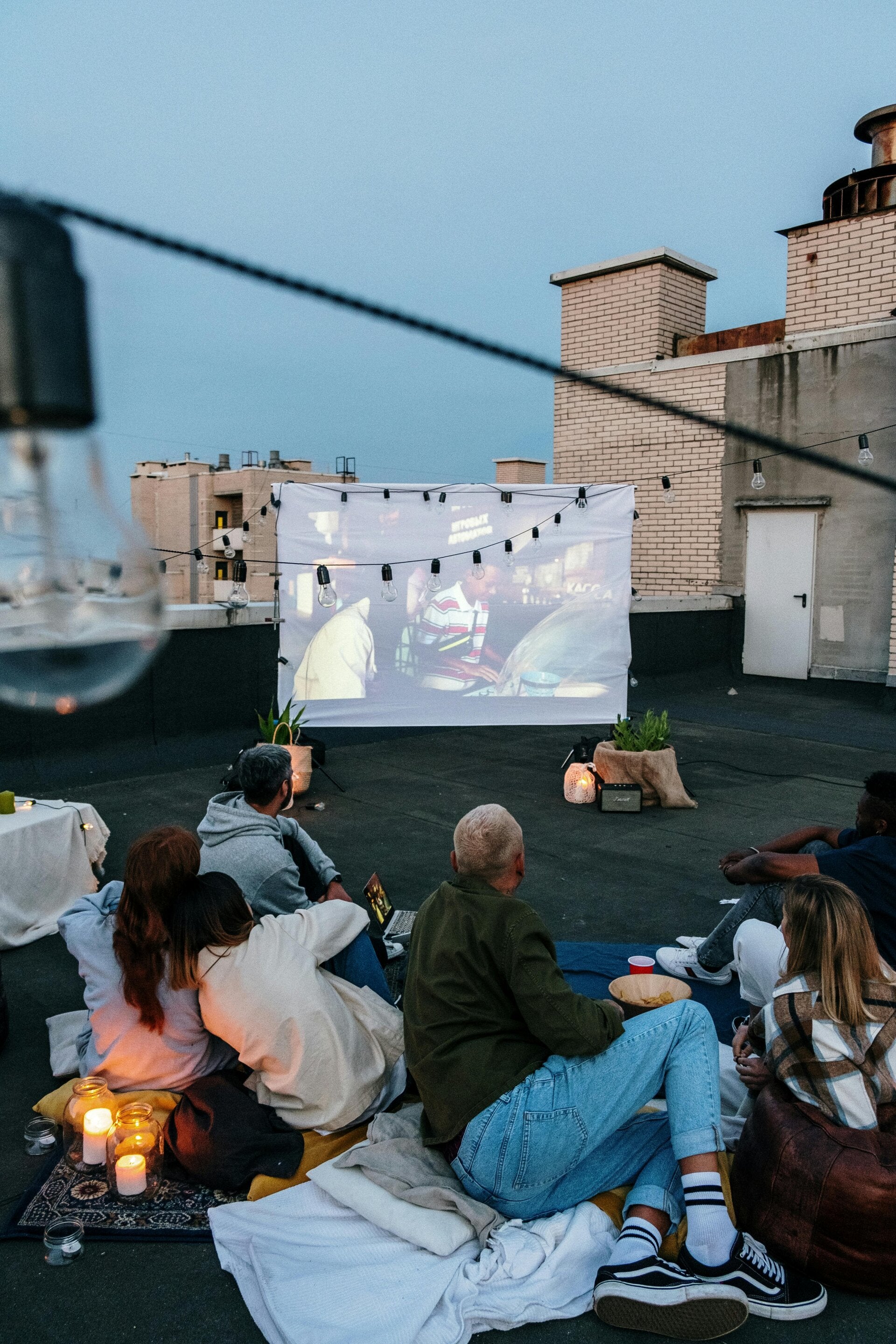
What’s changed since 2008, when I first wrote an article on this topic? A whole hell of a lot—but the soul of microcinema still flickers, even as the movie theatre itself teeters on the edge of cultural obsolescence.
Microcinema: From Fringe to Feed
The migration of film into the web’s bloodstream—social media, streaming platforms, and algorithmic discovery—is no longer a trend. It’s the new default. What began as a grassroots movement, Microcinema, has evolved into a decentralized, genre-bending, budget-agnostic ecosystem. It’s a place where anyone can make and share films with no stars, no money, and no permission.
AI seems to now promise to eliminate even the need for actors, sets, or cameras. We’re not quite there yet, but we’re close enough to ask: when the tools can do everything, what’s left for the artist?
Screens Everywhere, Press Nowhere
Microcinema thrives on minimal overhead and maximal freedom. Whether projected on a bar wall or streamed to a cracked phone screen, these films often bypass traditional press and distribution entirely. They’re invisible to the mainstream, yet omnipresent in the margins.
Sites like Tubi, Plex, and Shudder have become havens for low-budget, high-creativity content. They’re not just platforms—they’re curators of the weird, the risky, and the emotionally raw. Still, there’s no central archive, no definitive canon. Microcinema remains a living, breathing underground.
Exhibition Over Creation?
Microcinema International and other aggregators now emphasize events, education, and distribution more than the films themselves. The focus has shifted from making to showing, from the artist’s vision to the audience’s experience. It’s a subtle but telling evolution.
Mobile TV, podcasting, and streaming have globalized the reach of microcinema. As Marshall McLuhan said, “The medium is the message,” and today, the medium is everywhere, all the time.
The New Art House Is Algorithmic
Ephraim Katz once defined an art house as “a theater specializing in quality films… of limited box-office appeal.” In 2025, that definition feels quaint. “Limited appeal” now means “niche virality.” The Terrifier sequels trend, while the quiet, poetic indie gets buried, unless it’s boosted by a TikTok edit or a Reddit thread.
The sense of discovery once found on old sofas in dusty art house theaters has been flattened by recommendation engines. Home entertainment systems rival the intimacy of small cinemas, offering curated solitude over communal surprise.
Alternative Spaces, Persistent Spirit
Microcinema screenings now pop up in tractor-trailers, cafes, church basements, and man-caves. My own film “Off Street” was screened in a Memphis bar in 2024 thanks to the tireless efforts of Billups Allen and the GonerFest community. His book chronicling a year of microcinema screenings is a testament to the movement’s endurance.
These one-night theaters aren’t just venues—they’re rituals. They remind us that cinema is still a social act, even when the screen fits in your palm.
Why Microcinema Still Matters
We come to microcinema not for polish, but for possibility. For the thrill of novelty. For the echo of vaudeville. For the chance to see something no one else has seen, or maybe ever will.
What’s changed is that there’s more. More content. More platforms. More tools. But also: more noise. More sameness. More forgetting.
Microcinema resists that. It’s not just off-street—it’s off-grid. And maybe, just maybe, it’s what keeps cinema alive.
Add comment
Comments